Current issue
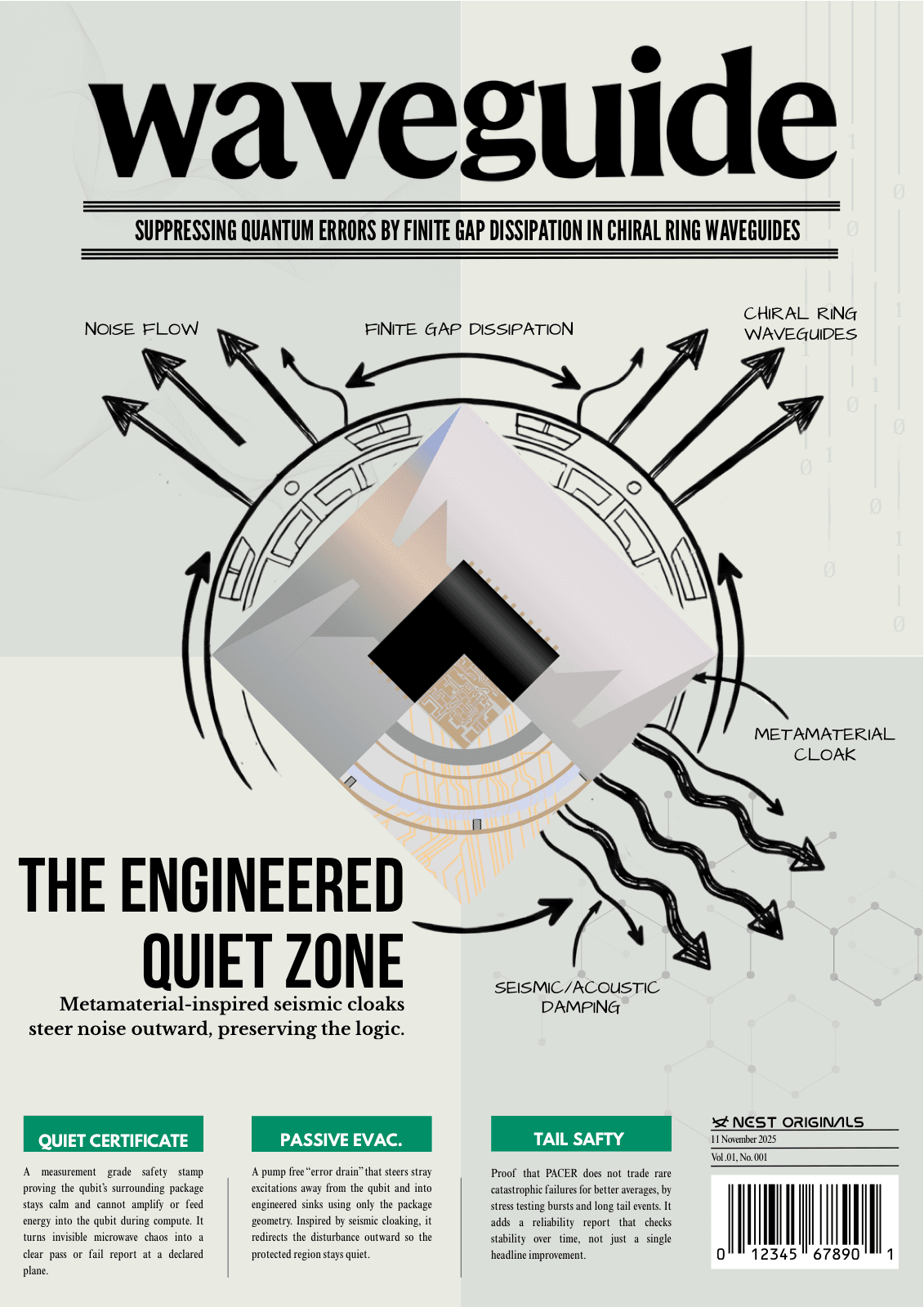
Founding issue / public work / NEST Publications
Publications
NEST Publications is the editorial and research division of NEST Frontier. It publishes work in physics, engineering, sustainability, and adjacent systems fields, with an emphasis on clarity, replicability, and practical consequence rather than decorative novelty.
Current Issue
The first issue functions as the founding editorial release of NEST Frontier. It is focused on work that moves beyond theoretical interest into public or technical consequence: prototypes, systems notes, research papers, replication studies, and case-driven analysis.
Current issue
Founding issue / public work / NEST Publications
Inside this issue
Editorial note on why NEST Publications exists
Cycle dispatch covering hackathon, Baekho, and issue planning
Founding issue built for rigor over decorative volume
Issue Signals
The journal becomes real when current editorial needs and routes are visible.
Call
Looking for strong first pieces that document real research, systems thinking, and legible methods.
Need
Shorter pieces are useful when they clarify a method, system, or technical decision with unusual clarity.
Output
The point is not volume. It is a durable first issue that makes the standard legible.
Editorial Standard
The objective is an enduring editorial platform, not a pile of student uploads.
What we publish
Original research, engineering design papers, technical notes, review essays, sustainability case studies, and replication studies.
What we value
Rigor, transparency, honest scope, legible methods, and work that can explain its relevance beyond the classroom.
What we avoid
Inflated claims, decorative abstraction, and research that cannot explain how it was produced or why it matters.
Editorial Pipeline
Publishing becomes credible when editorial status is legible, not implied.
Issue assembly
Founding review structure, article sequencing, and issue framing are still being assembled.
Submissions
Current intake favors smaller numbers of stronger pieces with clear methods and public consequence.
Formats
The journal will favor pieces that can survive reading, not just presentation.
Dispatches
The first publication layer should read like a journal buildout rather than a generic blog archive.
Opening statement
The journal is being built to publish student work that can survive scrutiny, remain legible after the semester, and contribute to a public record of making and research.